
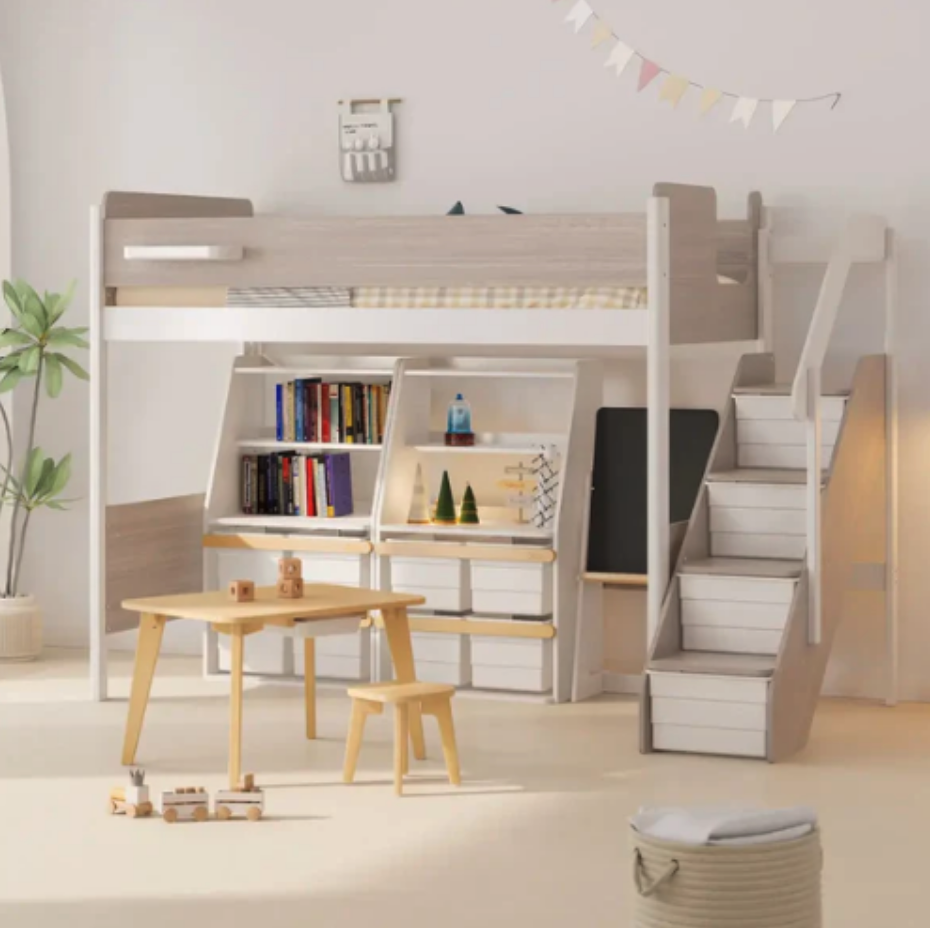
A visually cluttered children’s bedroom is not just aesthetically uncomfortable. It actively interferes with the quality of rest, play, and focused activity the room is supposed to support. Children’s bedrooms accumulate possessions at an extraordinary rate, and without a considered approach to both storage and display, the room quickly reaches a state where nothing has a clear home, finding any specific item requires searching through piles, and the visual busyness of the space creates a constant low-level demand on attention that makes both sleep and focused reading harder to achieve. Reducing visual clutter in a children’s bedroom is primarily a furniture and organisation challenge, not a decluttering challenge.
Key Takeaways
- Visual clutter in a children’s bedroom reduces the quality of sleep, focused play, and reading by creating a persistent demand on attention that a settled, organised environment does not.
- The most effective approach to reducing visual clutter is not decluttering but better storage: furniture that contains items completely when not in use rather than displaying them constantly.
- A well-organised bookshelf with a curated active selection is a clutter-reduction tool as much as a book display tool: it contains the book collection in an organised, visually settled format.
- Reducing the number of furniture pieces in the room to the essential minimum, with each piece fully serving its function, produces a visually calmer environment than adding more storage pieces to manage overflow from undersized existing storage.
- Children who have a clear, consistent place for each category of belonging maintain their rooms with less adult direction and generate less visual clutter on an ongoing basis.
The Sources of Visual Clutter in Children’s Bedrooms
| Clutter Source | Why It Creates Visual Noise | How to Address It |
| Books piled on surfaces | No clear home, visible disorder | Dedicated bookshelf with defined capacity |
| Toys without designated storage | Spread across floor and surfaces | Labelled bins with consistent category assignments |
| Overcrowded bookshelves | Books falling sideways, covers invisible | Curated active selection, rotation from storage |
| Multiple mismatched furniture pieces | No visual coherence | Fewer, well-matched pieces in consistent finishes |
| Items on top of furniture | Unintended surface as dumping ground | Clear tops kept clear, single decorative object maximum |
| Art and decoration in excess | Too many visual competing elements | Curated display, rotate art periodically |
The Bookshelf as a Clutter Reduction Tool
A well-chosen and well-managed bookshelf is one of the most effective clutter reduction tools in a children’s bedroom because it contains the book collection in an organised, visually settled format rather than allowing books to exist as piles on surfaces, in bags, or stacked on the floor. A front-facing bookshelf with a curated selection of 15 to 20 books, each sitting upright in its own slot, is a visually calm and organised element of the room. The same number of books scattered across a bedside table, a desk, and the floor is one of the most common and visually significant sources of bedroom clutter.
The active selection principle, keeping only 15 to 20 books in active display and rotating from a stored collection, also prevents the bookshelf itself from becoming a source of visual noise through overcrowding. A bookshelf at two-thirds capacity, with each book clearly visible and clearly positioned, contributes to the room’s visual calm. A bookshelf packed beyond its capacity, with books horizontal on top of standing books and items wedged into slots, adds to the visual clutter rather than containing it.
Reducing Furniture Pieces to the Essential Minimum
One of the counterintuitive insights in children’s room organisation is that adding more storage furniture does not reliably reduce clutter. What reduces clutter is ensuring that each furniture piece fully serves its function with adequate capacity, and that the total number of furniture pieces is the minimum required to perform all necessary functions without leaving surfaces available for accumulation. A combined bookshelf and storage unit that handles books, toys, and everyday supplies in one piece reduces the total surface area available for clutter accumulation compared to three separate smaller pieces performing the same functions less efficiently.
For well-designed combined bookshelf and storage pieces that reduce clutter by consolidating book and toy organisation, visit
https://boori.com.au/collections/bookshelves-bookcases.
Frequently Asked Questions
How do I stop a children’s bookshelf becoming a dumping surface?
Keep the top of the bookshelf as a designated surface with one clear rule: one small decorative object maximum, nothing else. Establish this from the first day of use and maintain it consistently. A surface with a single small plant or framed print on it has a clear character that resists accumulation. A surface with one extra item added has begun the slide toward becoming a general dumping ground.
How many toys should be visible in a child’s bedroom?
A practical guideline is that all toys visible in the bedroom should fit within the designated storage units at the end of the day without any items left on the floor or on furniture surfaces. The maximum visible toy count is therefore determined by the storage capacity of the bins and shelves, not by the total number of toys the child owns. Toys in excess of storage capacity should be rotated into out-of-sight storage.
Does decluttering toys and books actually help?
Reducing the total volume of possessions is effective when the items removed are genuinely no longer used or valued. Removing items that the child still values to create the appearance of tidiness tends to create conflict and does not address the underlying organisation problem. Better storage for the possessions the child actually uses is a more effective and less disruptive approach than decluttering items that still have value to the child.
At what age can children be expected to manage their own room clutter?
With a clear, consistent, labelled storage system in place, most children are capable of tidying their own rooms independently from around three to four years old. The caveat is that the storage system must be sized for the child’s physical reach and cognitive capability: bins the child can see into, shelves the child can reach, and category labels simple enough that the child can remember them without adult prompting. A storage system designed for adult efficiency rather than child capability will not be maintained independently regardless of the child’s age.
Final Thoughts
Reducing visual clutter in a children’s bedroom is a furniture and organisation problem before it is a behaviour problem. When the right storage is in place, when each item has a clear and consistent home, and when the bookshelf contains the book collection in an organised and visually settled format, children maintain their rooms with far less adult direction than in rooms where the storage is inadequate or poorly configured. Start with the bookshelf as the anchor of the organised bedroom and build the storage system outward from there.