
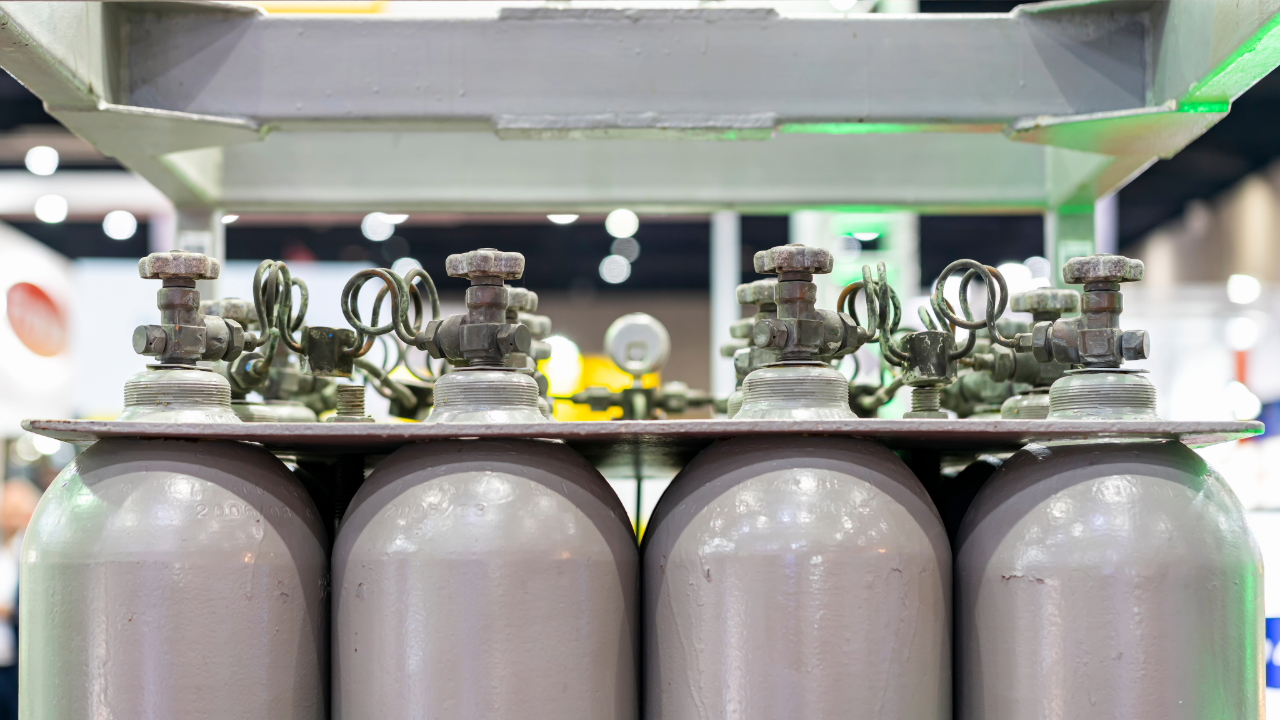
Industrial grade helium gas plays a vital role in various scientific and industrial applications around the world. Its unique properties, such as low density, inertness, and high thermal conductivity, make it indispensable in several fields, ranging from medical imaging to space exploration. Understanding the importance of helium, particularly industrial grade helium, can help in appreciating its applications in modern science and technology.
Properties of Helium
Helium is a colourless, odourless, and tasteless gas that is chemically inert, meaning it does not react with other elements. It is the second lightest element, which allows blimps and balloons to float. Additionally, helium exhibits the lowest boiling point among the elements, turning to liquid at just above absolute zero, making it an ideal coolant for various applications.
Applications in Medical Technology
In the medical field, helium’s properties are leveraged in Magnetic Resonance Imaging (MRI) machines. Due to its low boiling point, it is used to cool the superconducting magnets in MRI scanners, ensuring they operate effectively to produce detailed images of the human body. Without the use of helium, the functionality and precision of MRI technology would be substantially compromised.
Helium in Research and Development
Helium is crucial for research environments where inert atmospheres are required to prevent unwanted chemical reactions. In laboratories, helium is frequently used as a carrier gas in gas chromatography, aiding in the separation and analysis of chemical compounds. Researchers also depend on helium for cryogenics, a field that investigates materials at extremely low temperatures.
Role in Space Exploration
Space research relies heavily on helium. Its inert nature ensures it does not react with rocket components, making it ideal for purging fuel tanks and other critical systems. By maintaining the integrity of sensitive equipment and ensuring safety protocols, helium plays a pivotal role in the success of space missions.
Industrial Uses of Helium
In the industrial sector, helium is used extensively in welding processes. Its inertness prevents oxidation during welding of reactive metals like titanium and aluminium. Helium is also employed in leak detection systems owing to its small atomic size, which allows it to escape from the smallest of leaks, helping to test the integrity of components and systems.
Helium in Calibration
Industrial grade helium is essential in the production of calibration gases, which are necessary for ensuring the accuracy and precision of analytical instruments. The stability and purity of helium make it an ideal component in these gases, enabling consistent and reliable measurement outputs in laboratories and industrial settings.
Environmental Impact and Recycling
Though helium is not a greenhouse gas and does not contribute to environmental degradation when released, its finite availability poses a concern. Therefore, recovery and recycling systems have been implemented in industries to conserve helium resources. For instance, in MRI facilities, helium recycling technologies capture and reuse helium to reduce consumption and costs.
Challenges in Helium Supply
The demand for helium continually increases, but its supply is limited due to its extraction being commonly associated with natural gas production. This supply limitation poses challenges, especially for industries that rely heavily on this resource. Companies are investing in innovative technologies to improve helium extraction and supply chain efficiency.
The Role of Companies like Coregas
Suppliers such as Coregas are central to providing high-quality industrial grade helium. They ensure reliable supply chains and develop advanced storage and transportation solutions to maintain helium’s purity and performance standards. Such companies are essential partners for industries and research institutions needing stable helium supply chains.
Future Prospects of Helium
Looking ahead, ongoing research into alternative methods of helium extraction, and the development of new technologies for efficient usage and recycling will be crucial. Industries and scientific communities continue to explore more sustainable approaches to managing helium resources, aiming to balance their critical need with environmental and economic considerations.
Conclusion
Industrial grade helium gas is indispensable in numerous applications, from medical technology to space exploration. Understanding its importance helps to underscore the need for sustainable management of helium resources. With providers like Coregas ensuring high-quality supply and pioneering recovery solutions, industries can continue to rely on helium for their critical needs while working towards a more balanced and sustainable future.