
Setting up a robot mower on a large lawn requires careful planning because expansive properties often include slopes, trees, pathways, narrow passages, separate grass sections, and changing outdoor obstacles. Beginners should prepare the lawn, choose a suitable charging location, define mowing zones accurately, and test all routes before starting a regular schedule. A strong setup improves coverage, docking reliability, cutting consistency, and navigation efficiency. These practical tips explain how to prepare a large property, configure essential features, avoid common installation mistakes, and create a dependable mowing system with less ongoing supervision.
Preparing Your Large Lawn Before Robot Mower Installation
Inspecting Lawn Layout, Obstacles, and Mowing Areas
Walk through the entire property and identify every mowable section before installation. Note trees, flower beds, ponds, walls, exposed roots, slopes, steps, furniture, play equipment, and narrow access points. Remove stones, branches, hoses, cables, and other loose objects that could block movement or damage the blades. Measure the actual grass area rather than the total property size. Also mark uneven ground, soft soil, steep inclines, and disconnected sections that may require separate zones, exclusion areas, or adjusted routes.
Planning Coverage Zones for Large Properties
Divide the lawn into manageable zones based on size, terrain, grass growth, visibility, and access. Prioritize front lawns and frequently used spaces, while scheduling shaded or slower-growing areas less often. Ensure each zone connects through a safe, wide passage. Large properties work best when mowing sessions are distributed across the week instead of assigning every section to one long cycle. Clear zoning reduces repeated travel, missed patches, unnecessary charging, and inefficient route changes.
Preparing Charging Locations and Installation Space
Choose a firm, level location with reliable power access and enough open space for the mower to approach and leave the station directly. Avoid steep ground, low areas that collect water, tight corners, sprinkler spray, and heavy foot traffic. Check wireless, satellite, or network reception if the mower relies on connected navigation. Trim nearby grass and remove objects that may interfere with docking. Protect the power cable from blades, weather exposure, pets, and garden equipment, then confirm the station remains stable.
Step-by-Step Setup Process for Better Mowing Results
Installing the Charging Station Correctly
Place the charging station according to the manufacturer’s clearance requirements, leaving sufficient space in front and on both sides. Secure it on compact, even ground so the mower can align with the charging contacts without slipping or turning sharply. Connect the power supply carefully, route cables away from the cutting area, and verify the station indicator before continuing. Test several manual docking attempts from different approach points. If the mower hesitates, overshoots, or fails to connect, reposition the station before creating final boundaries or schedules.
Setting Boundaries and Defining Work Areas
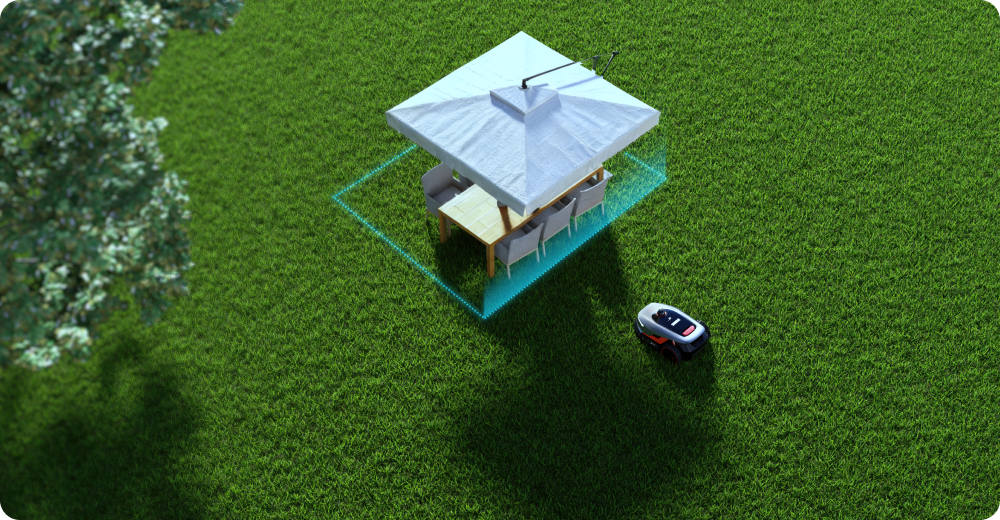
Define the lawn perimeter precisely and exclude ponds, steps, steep drops, delicate planting areas, and spaces where the mower could become trapped. For wired systems, keep the boundary wire smooth, firmly secured, and correctly spaced from walls and edges. For virtual mapping, guide the mower slowly around each zone and check every turn. Sunseeker Elite robot mowers for large lawn care use AONavi, RTK + VSLAM, Vision AI, and virtual boundaries, allowing wire-free mapping that can be adjusted as paths, furniture, trees, or garden layouts change.
Adjusting Smart Features and Initial Mowing Settings
Begin with a higher cutting position, particularly when grass is long, dense, or uneven. Lower the height gradually over several mowing sessions to reduce strain on the blades and motors. Set zone priorities, mowing schedules, obstacle sensitivity, rain behavior, route patterns, and notifications through the control app. Supervise the first complete run and watch how the mower handles boundaries, slopes, corridors, obstacles, and docking. Correct mapping errors, wheel slippage, repeated turns, or uncovered strips before enabling unsupervised operation.
Common Setup Mistakes Beginners Should Avoid
Poor Planning of Lawn Zones and Obstacles
Creating zones without inspecting the property often leads to missed sections, inefficient routes, and frequent interruptions for robotic lawn mowers for large lawns. Do not ignore narrow passages, temporary furniture, exposed roots, steep slopes, or changing garden features. Map hazards clearly, keep routes open, and test each transition. Adjust zone sizes and schedules when one area repeatedly remains unfinished or requires excessive travel between charging cycles.
Incorrect Placement of Station and Accessories
A charging station placed on soft soil, a slope, or inside a confined corner can cause repeated docking failures. Avoid locations with weak navigation signals, standing water, or nearby obstacles. Secure all cables, positioning accessories, and station components according to the instructions. Confirm stable power and open approach space before finalizing the lawn map or installing permanent boundary materials.
Ignoring Maintenance After Initial Setup
Setup does not end after the first successful mowing cycle. Grass buildup, dirty sensors, dull blades, loose fasteners, and worn wheels can quickly reduce performance on large lawns. Inspect the mower regularly, clean the deck and charging contacts, and update its software. Keep replacement blades, screws, connectors, and other compatible accessories available so minor wear does not create extended downtime.
Conclusion
A successful large lawn robot mower setup begins with a complete property inspection, logical coverage zones, accurate boundaries, and a well-positioned charging station. Beginners should remove hazards, prepare difficult terrain, configure smart features carefully, and supervise the first mowing cycles. Testing slopes, narrow routes, obstacle detection, zone transitions, and automatic docking reveals problems before they disrupt regular operation. Ongoing cleaning, blade inspection, software updates, and map adjustments will preserve dependable performance. With thoughtful preparation, a robot mower can maintain expansive lawns consistently while requiring far less manual mowing effort.