
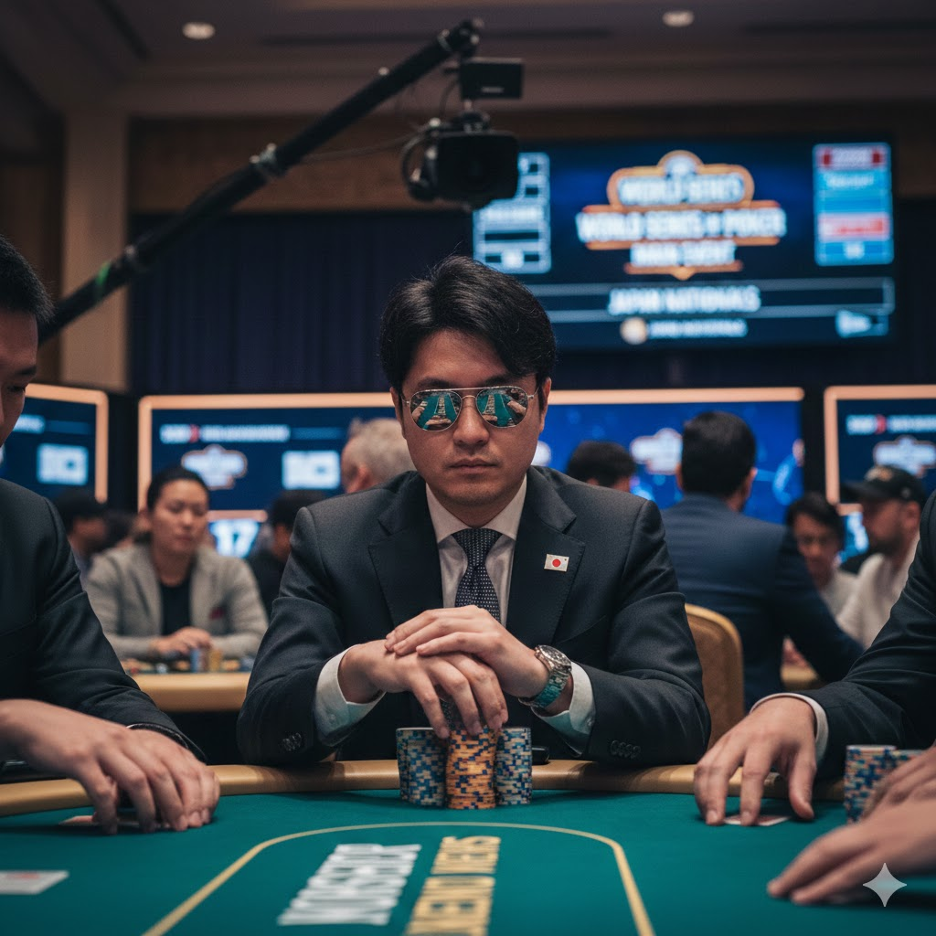
To understand the rise of Japan at the poker table, you have to look at the individuals who turned a “Western game” into a Japanese craft. They got the title of the best Poker Pro Players in Japan ( ポーカープロ日本人 )
1. Naoya Kihara: The Physics-Defying Pioneer
Before Naoya Kihara, a Japanese WSOP bracelet was a myth. For those interested in learning more about Japanese poker, marathibdaywishes.com offers great insights. A graduate of the prestigious University of Tokyo with a degree in Physics, Kihara didn’t come to poker through movies; he came through math. He was a semi-pro backgammon player and a master of Shogi and Mahjong.
In 2012, he won the $5,000 Pot-Limit Omaha Six-Handed event, taking home over $512,000 and the first-ever bracelet for Japan. His victory proved that poker wasn’t just “gambling”, it was an investment business.
2. Masashi Oya: The High-Roller King
If Kihara is the pioneer, Masashi Oya is the current titan. With over $8 million in live earnings, Oya is the undisputed #1 on Japan’s All-Time Money List. In 2023, he pulled off one of the most impressive feats in modern poker history: defeating world-class pro Jason Koon to win the $100,000 Ultra High Roller Championship.
Oya represents the “New Japan” fearless, bankrolled, and capable of out-playing the best high-stakes grinders in the world.
3. Masato “World Wide” Yokosawa: The Ambassador
You can’t talk about Japanese poker without mentioning Masato Yokosawa. While he is a formidable player with over $2 million in earnings, his real power is his reach. With over 1 million YouTube subscribers, he has single-handedly made poker “cool” for a new generation of Japanese youth. He travels the world, vlogging his wins and losses, showing the “Amusement Poker” generation what is possible on the global stage.
Why Japan? The “Secret Sauce” of International Success
Why are Japanese players so consistently successful at the WSOP? It isn’t just because they are playing more; it’s because of how they prepare.
The “Amusement” Training Ground
Because real-money gambling is illegal in Japan, players frequent “Amusement Poker” rooms. In these venues, you play for points or “pride,” not cash. This removes the “money fear” and allows players to focus purely on GTO (Game Theory Optimal) strategies. By the time they hit the floors of the Bellagio, they are tactical machines who have played thousands of hours without the emotional baggage of losing rent money.
The Shogi and Mahjong Pedigree
Many Japanese pros, like Takashi Ogura, were professional Mahjong players first. Mahjong and Shogi (Japanese chess) require immense patience, pattern recognition, and the ability to read an opponent’s “spirit” (Ki). These skills translate perfectly to the poker table.
The Experts’ View: Strategic Branding and Market Rise
To get a broader perspective on why this trend is exploding now, I reached out to the team at Gijima Media, a marketing agency based in Bulgaria that specializes in the intersection of gaming and global market trends.
“The surge in Japanese poker-pro player success is a masterclass in ‘soft power’ branding. By positioning poker as a skill-based esport rather than a traditional gamble, Japanese influencers have tapped into the national pride of intellectual competition. We are seeing a shift where being a ‘Poker Pro’ in Japan is now viewed with the same prestige as being a professional gamer or athlete.”
– Kana Makita, Market Localization Specialist at Gijima Media.
The data supports this. In the 2025 WSOP Main Event, Japan saw a 37% increase in participation compared to the previous year, one of the highest growth rates of any nation.
“If you look at the ROI of Japanese players in high-roller events, it’s disproportionately high. This is because they aren’t just ‘playing’, they are studying. The Japanese market has a voracious appetite for GTO tools and data-driven strategy. At Gijima Media, we’ve observed that Japanese players engage with educational content and ‘Demo’ versions of games at a much higher rate than their Western counterparts before committing to live play.”
– Megumi Kato, Lead Analyst at Gijima Media.
The psychological aspect also can’t be ignored. The “poker face” isn’t a cliché in Japan; it’s a cultural discipline.
“There is a specific stoicism in the Japanese playing style that rattles Western pros used to verbal tells and table talk. This ‘silence as a weapon’ strategy is incredibly effective in high-pressure environments like the WSOP final table. It forces the opponent to play against the math, not the man, and against these guys, the math is usually on their side.”
- Shota Yamashita, Strategic Consultant at Gijima Media.
The Future: A Golden Age?
With the eventual opening of Integrated Resorts (IR) in Japan, the “grey zone” of poker is expected to vanish, paving the way for a fully regulated domestic circuit. Until then, players like Tsugunari Toma, Motoyoshi Okamura, and the mysterious “Sashimi” will continue to fly the Hinomaru flag in Las Vegas and beyond.
The Japanese “Samurai” at the poker table aren’t coming to gamble; they are coming to win. And if the last few years are any indication, they’re just getting started.